TB-500
Also known as: Thymosin Beta-4, Tβ4, Thymosin β4
A synthetic form of Thymosin Beta-4, a ubiquitous actin-sequestering protein studied for wound healing and tissue regeneration.
Jump to notable studies ↓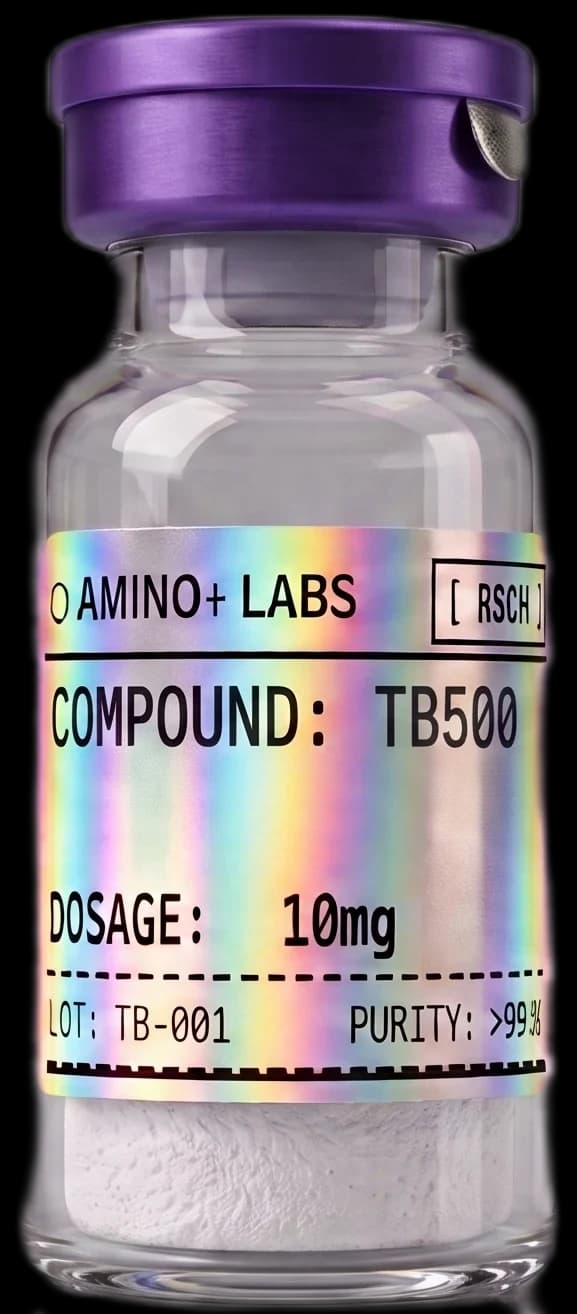
Molecular Data
- Class
- Beta-thymosin / Actin-sequestering peptide
- Molecular Weight
- ~4,963 Da (44-residue form)
- Molecular Formula
- C₂₁₂H₃₅₀N₅₆O₇₈S
- Half-Life
- ~1–2 hours (estimated in vitro; in vivo data limited)
- Sequence / Structure
- Ac-Ser-Asp-Lys-Pro-Asp-Met-Ala-Glu-Ile-Glu-Lys-Phe-Asp-Lys-Ser-Lys-Leu-Lys-Lys-Thr-Glu-Val-Pro-Val-Pro-Ala-Pro-Ser-Ser-Ser-Ser-Val-Asp-Ser-Val-Ala-Lys-Ala-Glu-Ala-Glu-Lys-Lys (44 aa)
Mechanism of Action
Thymosin Beta-4 (Tβ4) is a naturally occurring, highly conserved 44-amino acid peptide present in virtually all human cells and tissues. It is the most abundant member of the beta-thymosin family. TB-500 refers to the synthetic version used in research.
Key mechanisms under investigation:
- G-actin sequestration: Tβ4 binds monomeric (G-actin) with high affinity, regulating actin polymerization dynamics. This interaction modulates cell migration and proliferation — key processes in wound healing and tissue repair.
- Anti-inflammatory activity: Research suggests Tβ4 downregulates NF-κB signaling and reduces production of pro-inflammatory cytokines including TNF-α and IL-1β.
- Angiogenesis promotion: Studies have shown Tβ4 upregulates VEGF and metalloproteinases involved in new vessel formation.
- Cardiac progenitor cell activation: A notable body of research (primarily from Elspeth Bhatt and Nicola Smart at Oxford) has examined Tβ4's role in activating dormant epicardial progenitor cells and promoting post-myocardial infarction repair in mouse models.
- Anti-apoptotic signaling: Tβ4 activates the PI3K/Akt survival pathway, which may reduce cell death at injury sites.
The active actin-binding domain is the peptide fragment LKKTETQ (positions 17–23), which recapitulates many of the full protein's biological activities in cell culture.
Research History
Thymosin Beta-4 was first isolated from calf thymus by Allan Goldstein and colleagues at George Washington University in the 1960s, during early investigations into thymic hormones and immune function. Initial research focused on its role in T-cell maturation and immune regulation.
The discovery of Tβ4's widespread expression — far beyond immune tissue — and its association with actin dynamics shifted research toward regenerative medicine. Studies in the 1990s and 2000s demonstrated its presence in wound fluid and platelets, implicating it in the normal healing response.
From the mid-2000s, RegeneRx Biopharmaceuticals conducted clinical trials with Tβ4 for wound healing indications. Phase II trials for pressure ulcers and dry eye syndrome showed activity but did not lead to regulatory approval. More recent clinical programs explored cardiac indications following promising animal work, though none have yet reached Phase III.
As a research peptide, TB-500 remains in active use in preclinical models. Its combination with BPC-157 is a common subject of animal studies examining synergistic healing effects.
Notable Studies
Thymosin beta-4 accelerates wound healing
1997Malinda KM, Goldstein AL, Kleinman HK · Journal of Investigative Dermatology
Demonstrated that Tβ4 promoted dermal wound healing in a mouse model, with enhanced collagen deposition and epidermal migration at treated wound sites.
Thymosin beta-4 treatment promotes mitral valve repair
2010Smart N, Risebro CA, Clark JE, et al. · Nature
Demonstrated in mouse models that Tβ4 pre-treatment followed by myocardial infarction activated dormant epicardial progenitor cells (EPDCs) to differentiate into cardiomyocytes and smooth muscle, improving cardiac function.
A multicenter, randomized, double-blind phase II study of the efficacy and safety of thymosin beta-4 for the treatment of pressure ulcers
2009Guarnieri C, Conconi MT, et al. · Wound Repair and Regeneration
Phase II randomized trial showing statistically significant improvement in pressure ulcer healing with topical Tβ4 versus placebo; established early human clinical evidence.
Thymosin beta-4 promotes cardiomyocyte survival and improves functional recovery after myocardial infarction
2004Bock-Marquette I, Saxena A, White MD, Bhatt DL, Srivastava D · Nature
Showed that Tβ4 activated the Akt survival pathway in cardiomyocytes, reducing infarct size and improving cardiac function in a mouse MI model.