BPC-157
Also known as: Body Protection Compound 157, Pentadecapeptide BPC 157
A stable 15-amino acid gastric peptide studied for tissue repair and cytoprotection.
Jump to notable studies ↓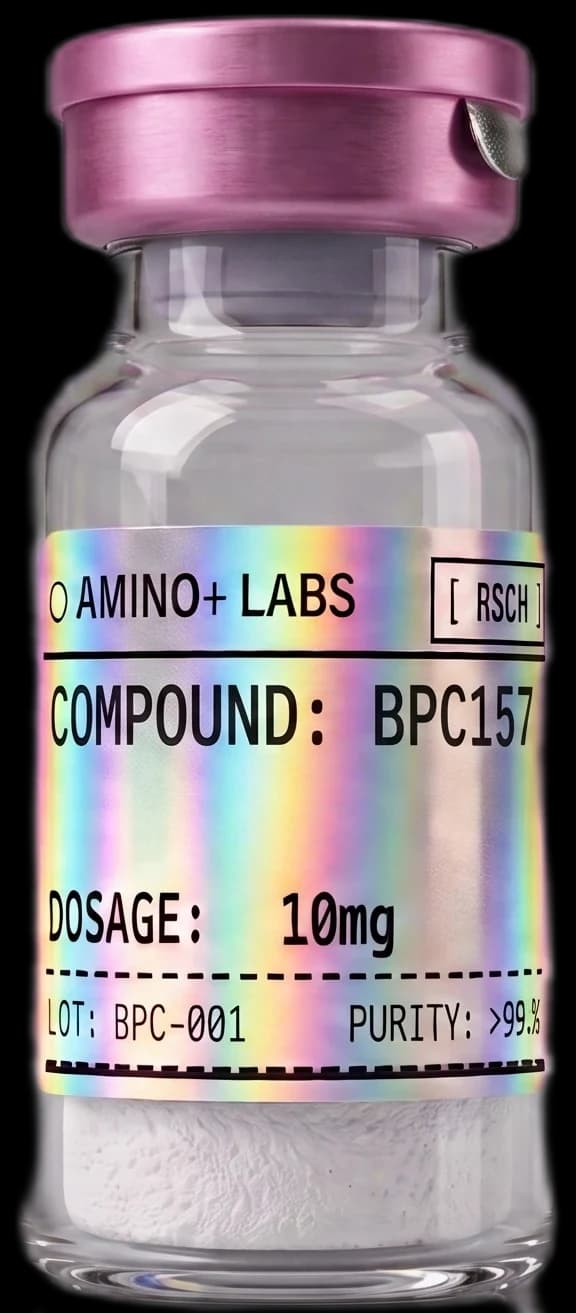
Molecular Data
- Class
- Pentadecapeptide / Gastroprotective peptide
- Molecular Weight
- 1419.56 Da
- Molecular Formula
- C₆₂H₉₈N₁₆O₂₂
- Half-Life
- ~1–4 hours (estimated, animal data)
- Sequence / Structure
- Gly-Glu-Pro-Pro-Pro-Gly-Lys-Pro-Ala-Asp-Asp-Ala-Gly-Leu-Val (GEPPPGKPADDAGLV)
Mechanism of Action
BPC-157 is a pentadecapeptide (15 amino acids, sequence GEPPPGKPADDAGLV) derived from the protein BPC found in human gastric juice. In preclinical research, it has been observed to:
- Promote angiogenesis by upregulating VEGF (vascular endothelial growth factor) and its receptor VEGFR2, accelerating the formation of new blood vessels at injury sites.
- Modulate the nitric oxide (NO) system, interacting with the NO–prostaglandin pathway implicated in gastroprotection and vascular homeostasis.
- Stimulate collagen synthesis and fibroblast proliferation, which may explain the tendon and ligament healing effects observed in rodent models.
- Exhibit anti-inflammatory activity by downregulating NF-κB signaling and reducing inflammatory cytokine production in experimental models.
- Interact with growth hormone (GH) receptor signaling and the dopaminergic and serotonergic systems, which may underlie some of the observed CNS effects in animal studies.
BPC-157 is resistant to degradation by stomach acid and proteolytic enzymes, contributing to its stability and making it an active area of gastrointestinal research.
Research History
BPC-157 was first isolated from human gastric juice and described by Sikiric et al. in the 1990s at the University of Zagreb. Initial research focused on its gastroprotective properties — the compound appeared to protect the gastric mucosa from alcohol-, aspirin-, and stress-induced ulceration in rat models.
Over the following decades, Sikiric's group and independent researchers published a substantial body of preclinical work extending the potential applications to tendon, ligament, bone, and muscle healing in rodent models. The peptide's stability under physiological conditions (unlike many GI peptides) made it practical for systemic delivery in animal experiments.
Studies in the early 2000s began examining potential CNS applications including effects on dopamine and serotonin systems in animal models of depression and Parkinson's disease. As of 2024, BPC-157 has not progressed to large-scale human clinical trials, and its effects in humans remain unestablished. The majority of evidence is from in vitro and rodent studies.
Notable Studies
BPC 157, a pentadecapeptide, promotes the healing of segmental bone defect in rabbits
1999Šebečić B, Nikolić V, Sikirić P, et al. · Journal of Orthopaedic Research
Demonstrated accelerated bone healing in a rabbit segmental defect model with BPC-157 administration, with histological evidence of enhanced callus formation.
Stable gastric pentadecapeptide BPC 157 heals rat colocutaneous fistula
2014Sikiric P, Seiwerth S, Rucman R, et al. · Surgery
BPC-157 accelerated closure of surgically created colocutaneous fistulas in rats, with effects attributed to upregulation of collagen and angiogenic factors at the wound site.
Cytoprotective effect of BPC 157 on human foreskin fibroblasts in vitro
2008Novinscak T, Brcic L, Staresinic M, et al. · Journal of Physiology and Pharmacology
In vitro study showing BPC-157 protected human fibroblasts from hydrogen peroxide-induced oxidative damage, suggesting a cytoprotective mechanism.
Stable gastric pentadecapeptide BPC 157: novel therapy in gastrointestinal tract
2013Sikiric P, Seiwerth S, Rucman R, et al. · Current Pharmaceutical Design
Comprehensive review summarizing gastroprotective, angiogenic, and healing properties of BPC-157 across multiple animal model systems.
Related Peptides
TB-500
A synthetic form of Thymosin Beta-4, a ubiquitous actin-sequestering protein studied for wound healing and tissue regeneration.
CJC-1295
A GHRH analog engineered for extended half-life, studied for its ability to stimulate sustained pulsatile growth hormone release.
GHK-Cu
A naturally occurring copper-binding tripeptide studied for its roles in collagen synthesis, tissue remodeling, and antioxidant activity.