LIPO-C Fat Blaster
Also known as: Lipotropic blend, MIC + B12 injection, L-carnitine / MIC / B-vitamin solution
A ready-to-use lipotropic solution of L-carnitine, methionine, inositol, choline, B12, B6 and NADH at 526 mg/mL combined.
Jump to notable studies ↓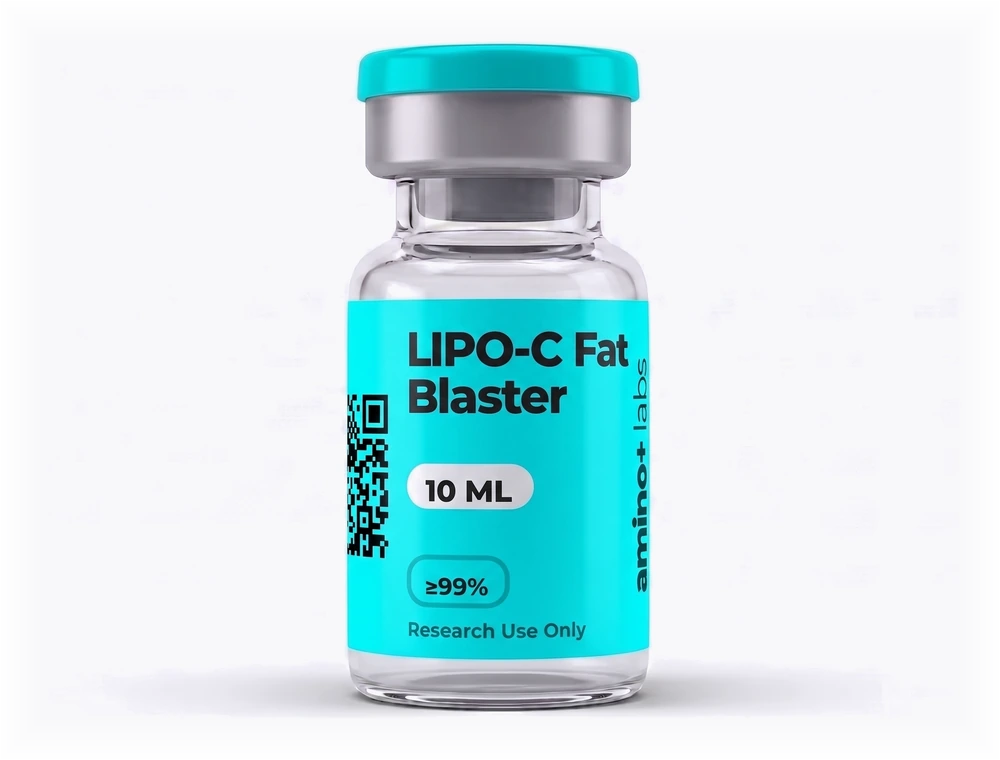
Molecular Data
- Class
- Lipotropic research solution (L-carnitine, methionine, inositol, choline, B12, B6, NADH)
- Molecular Weight
- Varies by constituent
- Molecular Formula
- Multi-component solution — see each constituent for its own formula
- Half-Life
- Varies by constituent; no pharmacokinetic data exist for the combination
Mechanism of Action
LIPO-C is a multi-component solution rather than a single compound, and none of its components is a peptide. The combination has not been studied as a formulation; what exists is separate biochemistry for each constituent.
- L-carnitine — required for the transfer of long-chain fatty acids across the inner mitochondrial membrane for β-oxidation. Cells accumulate and kidneys retain carnitine through OCTN2, a high-affinity organic cation transporter specific for it. Longo and colleagues give the current account of the carnitine shuttle.
- Methionine — an essential amino acid and the precursor of S-adenosylmethionine, the principal biological methyl donor. It sits directly upstream of the same one-carbon pool that choline feeds.
- Inositol — a cyclitol used in phosphatidylinositol synthesis and in the inositol-phosphate second-messenger system.
- Choline — required for phosphatidylcholine synthesis and therefore for hepatic VLDL secretion. Corbin and Zeisel document that humans deprived of dietary choline develop hepatosteatosis and liver damage, which is the mechanistic basis for calling choline lipotropic.
- Vitamin B12 (cobalamin) — cofactor for methionine synthase, which regenerates methionine from homocysteine. See the B12 entry.
- Vitamin B6 (pyridoxine) — cofactor for transaminases and for the transsulphuration enzymes that dispose of homocysteine.
- NADH — the reduced form of nicotinamide adenine dinucleotide, the electron carrier of the respiratory chain. See the NAD+ entry.
The methionine–inositol–choline group is conventionally abbreviated MIC. The shared thread across methionine, choline, B12 and B6 is one-carbon and methyl-group metabolism; carnitine and NADH sit on the fatty-acid-oxidation side.
Research History
Lipotropic formulations predate almost everything else in this library. The term "lipotropic" dates to work in the 1930s on dietary factors that prevented fatty liver in experimental animals, with choline the first such factor identified. MIC combinations grew out of that line of nutritional biochemistry.
The individual constituents are well characterised. Carnitine transport and its role in fatty-acid oxidation are established biochemistry; choline deficiency causing hepatosteatosis in humans is documented in controlled feeding studies; B12 and B6 cofactor roles are textbook.
What has not been established is the composite. LIPO-C-style blends have not been through controlled trials as formulations, and the specific 526 mg/mL combination in this vial reflects a compounding convention rather than a dose derived from published work. Nothing in the component literature supports treating the blend as an intervention with a known effect.
Notable Studies
Longo N, Frigeni M, Pasquali M. · Biochimica et Biophysica Acta
Reference account of the carnitine shuttle: why carnitine is required to move long-chain fatty acids into mitochondria for β-oxidation, and how OCTN2 governs cellular accumulation and renal retention.
Choline metabolism provides novel insights into nonalcoholic fatty liver disease and its progression
2012Corbin KD, Zeisel SH. · Current Opinion in Gastroenterology
Documents that humans on low-choline diets develop fatty liver and liver damage, and sets out the mechanisms — abnormal phospholipid synthesis, defective lipoprotein secretion, mitochondrial dysfunction. The basis for describing choline as lipotropic.
Nielsen MJ, Rasmussen MR, Andersen CBF, Nexø E, Moestrup SK. · Nature Reviews Gastroenterology & Hepatology
Covers the B12 component: a transport pathway involving more than fifteen gene products carrying cobalamin from food to the cells that use it as a cofactor.
Related Peptides
Vitamin B12
An essential cobalt-containing cofactor for methionine synthase and methylmalonyl-CoA mutase, supplied as a ready-to-use solution.
NAD+
An essential cellular coenzyme and substrate for sirtuins and PARP enzymes, studied for its role in energy metabolism, DNA repair, and its decline with age.